
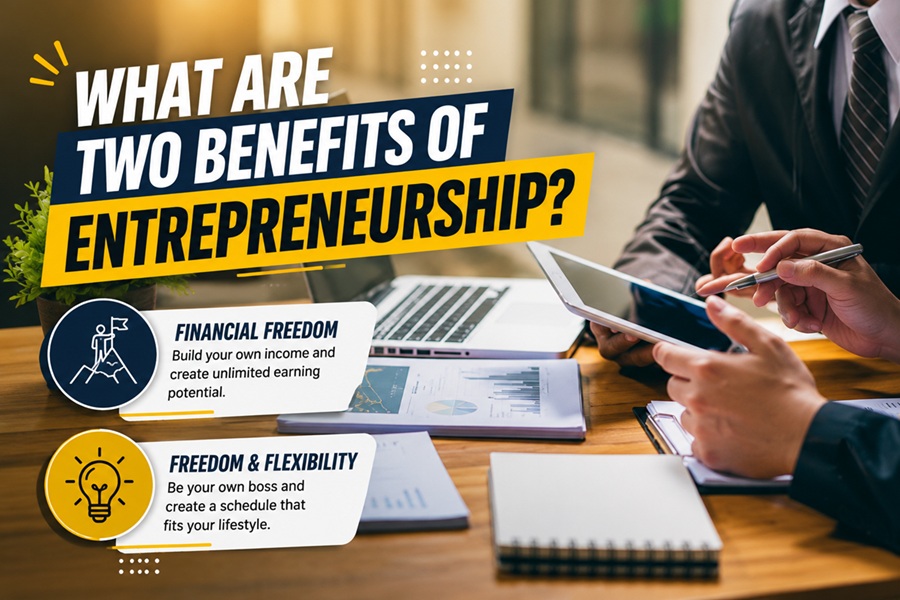
Two of the biggest benefits of entrepreneurship are independence and unlimited income potential. As an entrepreneur, you are your own boss, free to make your own decisions and shape your own working life. And because your earnings are tied to your success rather than a fixed salary, there is no ceiling on how much you can potentially make.
These two advantages capture why so many people are drawn to building their own business rather than working for someone else. Freedom and financial upside are powerful motivators. That said, entrepreneurship offers plenty of other rewards too, and it comes with real challenges, so it helps to see the full picture before deciding it is for you.
| Topic | Benefits of entrepreneurship |
| Category | Business and self-employment |
| Two main benefits | Independence and unlimited income potential |
| Other key benefits | Flexibility, growth, impact, ownership |
| Main trade-offs | Risk, uncertainty, long hours |
| Who it suits | Self-starters comfortable with responsibility |
| Common outcomes | Personal freedom, wealth creation, job creation |
Benefit One: Independence and Control
The first great pull of entrepreneurship is freedom. You decide what your business does, how it operates, and where it heads. There is no manager assigning your tasks or approving your ideas. That sense of ownership over your own path is something a regular job rarely offers.
This control shows up in daily life in ways employees seldom enjoy. You choose your projects, set your priorities, and build a company that reflects your values. For people who chafe under someone else’s rules, this alone makes the leap worthwhile.
- You make the key decisions about your business
- You choose which ideas and projects to pursue
- You build a culture and vision that are truly yours
- You answer to customers and yourself, not a boss
Benefit Two: Unlimited Income Potential
The second major benefit is financial. A salaried job pays a set amount, no matter how hard you work or how much value you create. Entrepreneurship removes that cap. When your business grows, so can your earnings, sometimes far beyond what a salary would allow.
This upside comes with risk, since income can also be unpredictable, especially early on. But the potential reward is real. Many of the wealthiest people built their fortunes by owning businesses rather than drawing a paycheque, and that possibility motivates countless founders.
| Employee Income | Entrepreneur Income |
| Fixed salary or wage | Tied to business success |
| Limited by pay scale | No fixed upper ceiling |
| Predictable and steady | Variable but scalable |
| Capped raises | Grows with the company |
The Freedom to Innovate
One benefit that flows directly from independence is the freedom to create. Entrepreneurs are not bound by a company’s existing way of doing things. They can test bold ideas, challenge norms, and build products exactly the way they envision, without waiting for approval from layers of management.
This creative freedom is why so many breakthrough products come from startups rather than large corporations. When you own the business, you decide what to try, and that room to experiment can lead to genuinely original work that a traditional job would never allow.
Building Something That Lasts
There is a deep satisfaction in creating something that outlives your daily involvement. A business you build can become a lasting asset, one you can grow, sell, or pass on. Employees rarely get to point at a company and say they made it from nothing.
This sense of legacy motivates many founders as much as money does. Watching an idea grow into a real organisation that serves customers and employs people offers a kind of fulfilment that is hard to find elsewhere. It turns work into something personal.
Creating Jobs and Impact
As a business grows, it often starts employing others, and that ripple effect is a benefit many entrepreneurs treasure. By creating jobs, founders support families and strengthen their communities. Their success becomes shared success.
Beyond employment, entrepreneurs frequently solve real problems for their customers. Whether it is a better product, a needed service, or a fresh idea, the impact reaches far beyond the founder’s own bank account. That broader contribution gives the work meaning.
Learning From Every Experience
Entrepreneurship is one of the fastest ways to grow as a person. Every decision, win, and setback teaches something you carry forward. Unlike a narrow job that repeats the same tasks, running a business throws new problems at you constantly, and solving them builds real capability.
Even failures become valuable lessons rather than dead ends. Many successful founders point to earlier stumbles as the experiences that taught them the most. This mindset, treating challenges as education, is one of the quiet benefits that keeps entrepreneurs moving forward.
Aligning Work With Your Values
When you build your own company, you get to decide what it stands for. You can prioritise causes you care about, treat people the way you believe is right, and run the business in line with your principles. That alignment between work and values is rare in traditional employment.
For many founders, this is deeply motivating. Knowing that your daily effort supports something you genuinely believe in adds meaning that money alone cannot provide. It turns a business into an expression of who you are.
Turning Passion Into a Living
Plenty of entrepreneurs start by turning something they love into a business. Whether it is a craft, a skill, or a cause, building a company around a passion lets you spend your days on work that excites you. That enthusiasm often fuels the persistence success requires.
It is not always easy, and passion alone does not pay the bills. But when a founder combines genuine interest with sound business sense, work stops feeling like a chore. Few benefits rival waking up eager to do what you do.
Beyond the Top Two: Other Benefits
While independence and income are the headline advantages, entrepreneurship brings other rewards that many founders treasure just as much. These often reveal themselves over time.
- Flexibility to set your own schedule and work style
- Personal growth from constant learning and problem-solving
- The chance to make a real impact on customers and communities
- Job creation, employing others and shaping their careers
- Deep satisfaction from building something of your own
Flexibility and Lifestyle
Many entrepreneurs value the freedom to design their days around their lives rather than the reverse. You can, in principle, work when you are most productive, take time for family, or build the business around personal goals. This flexibility is a genuine draw, even if the early years often demand long hours.
It is worth being honest here. The flexibility is real, but so is the workload. Founders frequently work more, not less, in the beginning. The difference is that the effort goes toward something they own and believe in.
Growth and Personal Development
Running a business stretches you in ways a comfortable job rarely does. You wear many hats, from sales to finance to leadership, and you learn fast because you have to. That constant challenge builds skills and confidence that stay with you for life.
Many entrepreneurs describe the personal growth as one of the most rewarding parts of the journey, separate from money entirely. Overcoming obstacles and seeing your own capabilities expand is its own kind of reward.
The Trade-Offs to Weigh
No honest discussion of entrepreneurship ignores the downsides. The same freedom that appeals so strongly also means the responsibility rests entirely on you. Understanding the trade-offs helps you decide whether the benefits are worth it for your situation.
| Benefit | Matching Trade-off |
| Independence | Full responsibility for outcomes |
| Unlimited income | Unstable income, especially early |
| Flexibility | Often longer hours at the start |
| Ownership | Personal financial risk |
Is Entrepreneurship Right for You?
The benefits shine brightest for people who value freedom, can handle uncertainty, and are willing to take responsibility for their own success. If you thrive on making decisions and building things, the rewards can be enormous. If you prefer stability and predictable income, the trade-offs may weigh heavier.
There is no wrong answer. Entrepreneurship suits some temperaments beautifully and others less so. Knowing what you want from work and life is the best guide to whether these benefits outweigh the risks for you.
Frequently Asked Questions
What are the two main benefits of entrepreneurship?
The two main benefits are independence, meaning you are your own boss, and unlimited income potential, since your earnings are not capped by a fixed salary.
Is entrepreneurship better than a regular job?
It depends on the person. Entrepreneurship offers freedom and higher earning potential but carries more risk, while a job offers stability and predictable pay.
Can anyone become an entrepreneur?
In principle, yes, but it suits those comfortable with responsibility, uncertainty, and self-direction. The right mindset matters as much as the idea.
What are the risks of entrepreneurship?
The main risks include unstable income, financial loss, long working hours, and the pressure of being fully responsible for the business’s success.