
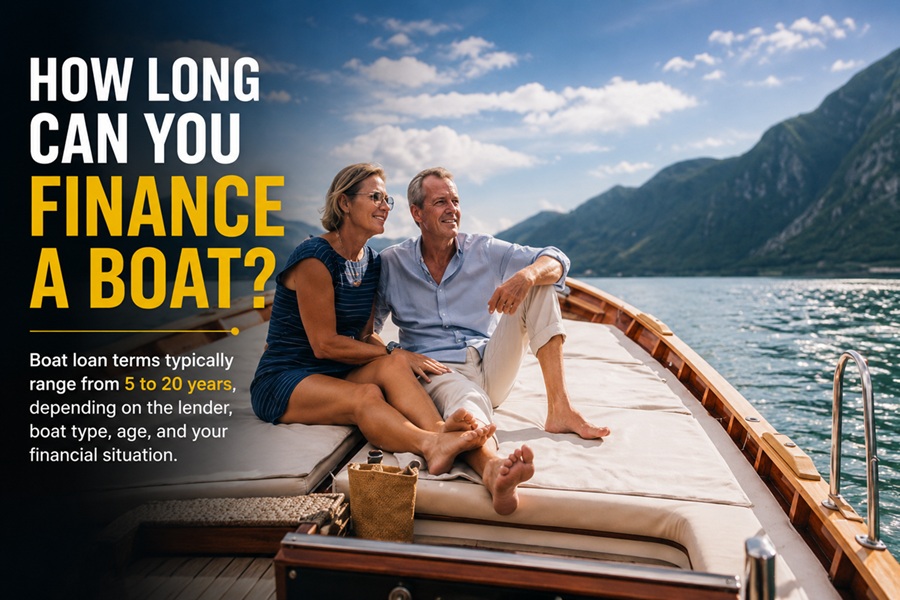
You can typically finance a boat for anywhere from about 2 to 20 years, with most boat loans falling between 10 and 15 years. The exact term you qualify for depends on the size of the loan, the age and type of the boat, the lender you choose, and your credit profile. Larger, newer, and more expensive boats generally qualify for the longest repayment periods.
Boat loans work a lot like other big-ticket financing, but they tend to stretch longer than car loans because boats cost more and hold value differently. A longer term lowers your monthly payment, which makes an expensive boat feel affordable, but it also means paying more interest over time. Understanding how term lengths work, and what drives them, helps you strike the right balance between an easy payment and a sensible total cost.
| Topic | Boat loan term lengths |
| Category | Personal finance and lending |
| Typical range | About 2 to 20 years |
| Most common terms | Between 10 and 15 years |
| Longer terms suit | Larger, newer, more expensive boats |
| Shorter terms suit | Smaller or used boats and lower loan amounts |
| Key factors | Loan size, boat age, lender, credit score |
| Trade-off | Lower monthly payment versus more total interest |
Typical Boat Loan Terms
Lenders usually match the length of a boat loan to how much you borrow. Smaller loans get shorter terms, while larger loans can be stretched over many years to keep payments manageable. The table below shows how term length often scales with the amount financed.
| Loan Amount | Common Term Range |
| Smaller loans | Around 2 to 7 years |
| Mid-range loans | Around 7 to 12 years |
| Larger loans | Around 12 to 20 years |
| Premium or luxury boats | Up to 20 years or more |
These ranges are guidelines, not fixed rules. Each lender sets its own limits, so it always pays to compare offers rather than assume a single standard applies everywhere.
What Affects the Length You Can Get
Several factors determine how long a lender will let you finance a boat. They all come down to how much risk the lender takes on. The more confident a lender feels about being repaid, the longer the term they will usually offer.
| Factor | How It Affects the Term |
| Loan amount | Larger loans often allow longer terms |
| Boat age | Newer boats qualify for longer financing |
| Boat type | Bigger vessels may earn extended terms |
| Credit score | Strong credit unlocks better terms |
| Down payment | A larger deposit can improve your options |
| Lender policy | Each lender sets its own maximum term |
New Versus Used Boats
The age of the boat plays a big role in how long you can finance it. Lenders view newer boats as more reliable collateral, so they are willing to offer longer terms. Older, used boats carry more uncertainty about their condition and value, which tends to shorten the terms on offer.
If you are buying used, expect the available term to be shorter than for an equivalent new boat, and some lenders set an age limit beyond which they will not finance at all. Factoring this in early helps you plan your budget realistically.
The Trade-Off of Longer Terms
Stretching a loan over more years has an obvious appeal: lower monthly payments. That can make a dream boat fit your budget today. But the convenience comes at a cost, because a longer term means paying interest for longer, which raises the total you pay overall.
There is another wrinkle with boats specifically. They tend to lose value over time, so a very long loan risks leaving you owing more than the boat is worth, especially in the early years. Weighing the comfort of a low payment against the higher lifetime cost is the key decision here.
| Longer Term | Shorter Term |
| Lower monthly payment | Higher monthly payment |
| More interest paid overall | Less interest paid overall |
| Easier on cash flow | Faster path to full ownership |
| Higher risk of owing more than value | Builds equity sooner |
Where to Get a Boat Loan
Boat financing comes from several sources, and where you borrow can affect both your term and your rate. Each option has its own strengths, so it is worth exploring more than one before signing anything. Comparing lenders often reveals meaningful differences.
| Lender Type | What to Expect |
| Banks and credit unions | Competitive rates for strong credit |
| Marine lenders | Specialists who understand boats well |
| Dealership financing | Convenient but not always the cheapest |
| Online lenders | Quick applications and easy comparison |
Marine specialists often offer the longest terms because boats are their focus, while a credit union might reward loyal members with better rates. Shopping around lets you weigh term length against overall cost.
Costs Beyond the Loan
The loan term is only part of the financial picture. Owning a boat brings ongoing costs that should factor into how much you borrow and for how long. Stretching a loan to afford a boat you cannot maintain is a common and costly mistake.
- Insurance, which lenders often require for financed boats
- Storage or docking fees when the boat is not in use
- Regular maintenance, repairs, and winterising
- Fuel, registration, and licensing costs
Fixed Versus Variable Rates
Beyond the term length, the type of interest rate shapes what you ultimately pay. A fixed rate stays the same for the life of the loan, giving you predictable payments. A variable rate can rise or fall over time, which adds uncertainty, especially on a long loan.
For a lengthy boat loan, many borrowers prefer the stability of a fixed rate, since it protects them from rising costs over a decade or more. A variable rate might start lower but carries the risk of climbing. Which suits you depends on your appetite for that uncertainty.
How Loan Term Affects Your Payment
It helps to see how the same loan feels different across various terms. Stretching a loan over more years shrinks the monthly payment, which is the main appeal of a long term. But that lower payment hides a larger total cost, because interest keeps accruing for all those extra years.
The pattern is consistent across boat loans. A shorter term means a heftier monthly bill but far less interest paid in the end, while a longer term eases the monthly strain at the expense of a bigger overall cost. Seeing both sides clearly helps you choose with your eyes open rather than fixating on the monthly figure alone.
| Term Length | Monthly Payment | Total Interest |
| Shorter | Higher | Lower |
| Medium | Moderate | Moderate |
| Longer | Lower | Higher |
How to Get the Best Terms
A few steps can improve both the length and the quality of the financing you are offered. Lenders reward borrowers who look like a safe bet, so anything that lowers their risk works in your favour.
- Build a strong credit score before applying
- Save for a larger down payment to reduce the loan size
- Compare offers from several lenders, not just the dealer
- Consider a slightly shorter term if you can afford the payments
- Get pre-approved so you know your options before shopping
Should You Choose the Longest Term Available?
The longest term is not automatically the best choice, even though it lowers your monthly payment. The right term balances an affordable payment with a sensible total cost and a reasonable path to actually owning the boat outright.
A good rule of thumb is to pick the shortest term you can comfortably afford. That keeps interest costs down and helps you build equity faster, reducing the chance of being stuck owing more than the boat is worth. Only stretch the term longer if you genuinely need the lower payment.
Frequently Asked Questions
What is the longest you can finance a boat?
Many lenders offer terms up to around 20 years, and sometimes longer for large or luxury boats, though most loans fall between 10 and 15 years.
Do boat loans last longer than car loans?
Often yes. Because boats cost more and are financed differently, their loan terms commonly stretch longer than typical car loans.
Can you finance a used boat for a long time?
Usually the term is shorter than for a new boat, since lenders see used boats as higher risk, and some set an age limit on what they will finance.
Is a longer boat loan term a good idea?
It lowers your monthly payment but increases total interest and the risk of owing more than the boat is worth, so shorter terms are often the wiser choice if affordable.
What affects the boat loan term I qualify for?
The loan amount, the boat’s age and type, your credit score, your down payment, and each lender’s own policies all shape the term you can get. Stronger credit and a larger deposit generally open the door to the longest and most favourable terms available.