
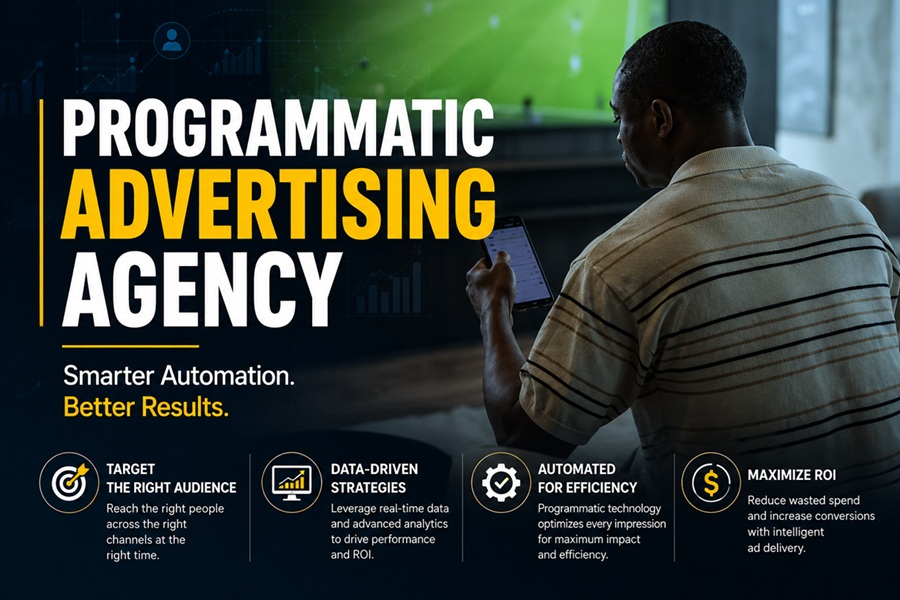
A programmatic advertising agency is a company that plans, buys, and manages digital ads using automated technology that purchases ad space in real time, rather than through manual negotiations. In simple terms, it uses software and data to place your ads in front of the right people, on the right websites, apps, and streaming services, at the right moment, and it optimises those campaigns continuously to get better results.
Programmatic buying now powers a large share of digital advertising, but the technology and strategy behind it are genuinely complex. That complexity is exactly why these specialist agencies exist. They bring the platforms, expertise, and data know-how that most brands do not have in-house, turning a complicated automated system into campaigns that actually perform.
| Term | Programmatic advertising agency |
| Category | Digital marketing and advertising |
| Core function | Automated buying and management of digital ads |
| Key technology | Demand-side platforms and real-time bidding |
| Main channels | Display, video, CTV, audio, mobile, native |
| Driven by | Data, audience targeting, and optimisation |
| Who uses them | Brands wanting scale without in-house expertise |
| Main benefit | Precise targeting and efficient ad spending |
What Programmatic Advertising Actually Means
Before the agency makes sense, the concept behind it needs unpacking. Traditional ad buying involved people negotiating deals to place ads in specific spots. Programmatic replaces that manual process with automated technology that buys individual ad impressions instantly, often through real-time auctions that happen in milliseconds as a page loads.
This automation lets advertisers target individual audiences rather than just buying a slot and hoping the right people see it. Instead of paying for a whole billboard, you effectively pay to reach specific people wherever they happen to be online, which makes spending far more efficient when done well.
What a Programmatic Agency Does
A programmatic advertising agency handles the entire process on your behalf, from strategy through to reporting. Their work goes well beyond simply pressing buttons on a platform. They combine technical operation with strategic thinking to make campaigns deliver.
| Service | What It Involves |
| Strategy | Defining goals, audiences, and channels |
| Platform management | Operating the buying technology and tools |
| Audience targeting | Using data to reach the right people |
| Creative guidance | Advising on ad formats that convert |
| Optimisation | Adjusting campaigns to improve results |
| Reporting | Measuring performance and proving value |
The Technology Behind It
Programmatic runs on a stack of connected platforms, and understanding the basics helps explain why expertise matters. Agencies operate these systems daily, which is difficult for a brand to replicate without dedicated staff and significant investment.
At the centre sits the demand-side platform, the software advertisers use to buy ad space across many sources at once. It connects to exchanges where inventory is auctioned, and it draws on data platforms that hold audience information. Coordinating these tools effectively is a specialist skill in itself.
- Demand-side platforms for buying inventory at scale
- Ad exchanges where impressions are auctioned in real time
- Data platforms that inform audience targeting
- Analytics tools that measure and refine performance
The Channels You Can Reach
One strength of programmatic is how far it reaches across the digital landscape. A single strategy can span many formats and screens, all managed through connected technology. This breadth is part of what agencies help brands navigate.
| Channel | Where Ads Appear |
| Display | Banner ads across websites |
| Video | In-stream and online video placements |
| Connected TV | Ads within streaming television content |
| Audio | Streaming music and podcast platforms |
| Mobile | Apps and mobile websites |
| Native | Ads that match the surrounding content |
Why Brands Use a Programmatic Agency
The obvious question is why not simply run programmatic in-house. For some large organisations, that is the eventual path. But for most brands, partnering with an agency solves several real problems at once, from technical complexity to the cost of platforms and talent.
Agencies bring established relationships, ready access to platforms, and teams who live in this world every day. That combination usually produces better results, faster, than a brand learning the ropes alone, especially given how quickly the technology and best practices evolve.
- Access to expensive platforms without the full commitment
- Specialist expertise that is hard to hire and retain
- Faster campaign launches and quicker learning
- Better targeting through experience and data know-how
- Freeing internal teams to focus on wider strategy
The Benefits of Doing It Well
When programmatic is handled by a capable agency, the advantages are substantial. Precision is the headline benefit, since ads can be targeted to specific audiences rather than sprayed broadly. That precision reduces waste and stretches budgets further.
Beyond targeting, the automation allows campaigns to run at enormous scale while still being adjusted in near real time. If something is not working, it can be changed quickly, and successful elements can be scaled up. This constant optimisation is where much of the value lies.
| Benefit | What It Delivers |
| Precise targeting | Reaching the right audience, less waste |
| Real-time optimisation | Quick adjustments to improve results |
| Scale | Reaching large audiences efficiently |
| Measurability | Clear data on what is working |
| Efficiency | More impact from the same budget |
How the Buying Process Works
It helps to see how a single programmatic ad placement actually happens, because the speed is remarkable. When someone opens a webpage or streaming app, an auction for the available ad space begins and concludes almost instantly, before the content finishes loading.
In that split second, the system evaluates who the viewer is, decides whether they match an advertiser’s target audience, and places a bid. The highest relevant bid wins, and the ad appears. All of this happens automatically, millions of times over, which is why human negotiation could never match programmatic’s scale.
- A user opens a page or app with ad space available
- An auction for that impression begins in milliseconds
- Advertisers bid based on how well the user fits their audience
- The winning ad loads and displays instantly
Agency Versus In-House
A recurring decision for growing brands is whether to keep programmatic with an agency or build the capability internally. Both paths are valid, and the right answer depends on your budget, ambitions, and appetite for complexity.
Running it in-house offers more control and can lower media costs over time, but it demands hiring specialists, licensing platforms, and building expertise from scratch, which is expensive and slow. An agency provides that capability immediately, which is why most brands start with, or stay with, an agency partner.
| Using an Agency | Building In-House |
| Immediate expertise and platforms | Full control over campaigns |
| Lower upfront investment | High setup and staffing cost |
| Faster to launch | Slower to build capability |
| Ongoing agency fees | Potentially lower long-term media cost |
Common Misconceptions
Programmatic advertising attracts a few persistent myths that can lead brands astray. Clearing them up helps set realistic expectations before you commit budget to it.
One common belief is that programmatic runs itself with no oversight needed. In reality, the best results come from active management and strategy, not set-and-forget automation. Another myth is that it is only for huge brands, when in fact businesses of many sizes use it. The technology automates the buying, but human judgement still shapes success.
What to Look for in an Agency
Not all programmatic agencies are equal, so choosing well matters. The right partner should be transparent about how they work and where your money goes, since the automated nature of programmatic can otherwise obscure the details. Clarity is a good sign.
- Transparency about fees, platforms, and where spend goes
- Clear reporting tied to real business goals
- Experience in your industry or with similar objectives
- Strong data and targeting capabilities
- A strategic approach rather than just running the technology
Questions Worth Asking
Before signing with any programmatic agency, a few direct questions reveal a great deal about how they operate. Their answers help you judge whether they will act as a genuine partner or simply a middleman taking a cut.
Ask how they measure success, how transparent they are about media costs versus their fees, what platforms they use, and how they will report results. An agency confident in its value will answer these openly, while vague responses are a warning worth heeding.
Do You Actually Need One?
Whether a programmatic agency is right for you depends on your scale, budget, and internal capabilities. For brands spending meaningfully on digital advertising without the in-house expertise to run programmatic themselves, an agency usually pays for itself through better results and reduced waste.
Smaller advertisers with tight budgets might start with simpler self-serve advertising options first. But once campaigns grow in size and complexity, the precision and efficiency a good agency brings often become well worth the investment.
Frequently Asked Questions
What does a programmatic advertising agency do?
It plans, buys, and manages digital ads using automated technology, handling strategy, targeting, platform operation, optimisation, and reporting to deliver better campaign results.
How is programmatic different from traditional ad buying?
Traditional buying involves manual negotiation for ad space, while programmatic uses software to buy individual impressions automatically in real time, targeting specific audiences.
Is a programmatic agency worth the cost?
For brands with meaningful ad budgets and no in-house expertise, yes. The precise targeting, efficiency, and optimisation usually outweigh the fees through improved results.
What channels can programmatic reach?
It spans display, video, connected TV, audio, mobile, and native advertising, letting a single strategy reach audiences across many screens and formats.
Can small businesses use programmatic advertising?
Yes, though smaller advertisers may start with simpler self-serve tools. As budgets and complexity grow, working with an agency often becomes more worthwhile.