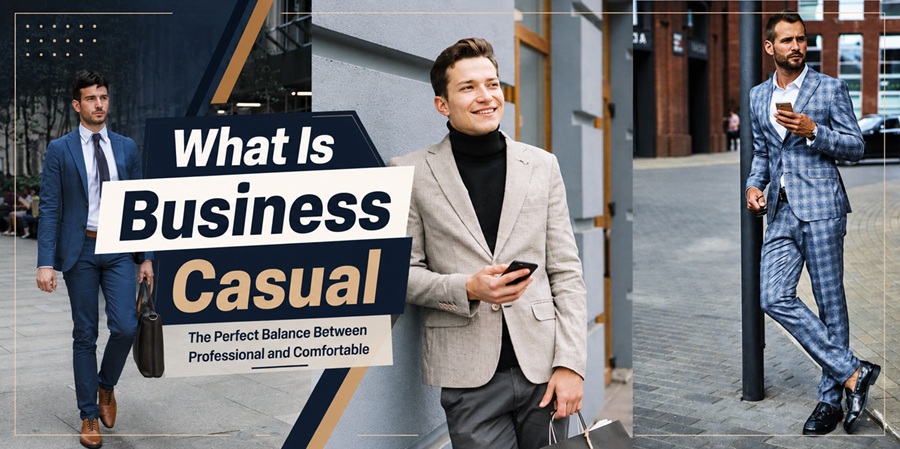
Tag: dress code

  • What Is Business Casual? A Simple Guide to Getting the Dress Code Right

    What Is Business Casual? A Simple Guide to Getting the Dress Code Right

    Business casual is a workplace dress code that sits comfortably between a full formal suit and everyday weekend clothes. In plain terms, it means dressing neatly and looking put-together without the stiffness of a tie and blazer. A collared shirt with chinos, a blouse with tailored trousers, or a modest knit sweater with clean shoes would all land squarely inside the business casual zone.

    Here is the part that trips people up: there is no single official rulebook. What passes as business casual at a tech company in Austin can look noticeably different from the same label at a law firm in Boston. The underlying idea stays steady across industries, though. You want to read as polished and professional while still feeling relaxed enough to get through a normal working day.

    Term Business Casual
    Category Workplace dress code
    Formality level Between formal and casual
    Common settings Offices, client meetings, interviews, networking events
    Typical menswear Collared shirts, chinos, sweaters, loafers
    Typical womenswear Blouses, tailored trousers, knee-length skirts, flats
    Usually avoided Ripped jeans, shorts, flip-flops, graphic tees, athletic wear
    Rose to popularity 1990s, alongside the spread of Casual Friday
    Loosely related term Smart casual

    Where the Business Casual Idea Came From

    The dress code has roots in the 1990s, when American offices began loosening their standards one day a week. Casual Friday gave employees permission to swap the suit for something more comfortable, and workers liked it. As technology firms grew and rewrote the rules of office life, the relaxed look slowly spread across the whole week.

    Over time, companies realised that comfort and professionalism did not have to fight each other. That middle ground became known as business casual, and it stuck. Today it is probably the most common dress expectation across white-collar workplaces in the United States.

    What Business Casual Looks Like for Men

    For men, the recipe is fairly forgiving. The goal is a clean, intentional outfit that would look right in a meeting but would not feel out of place grabbing lunch afterward. A button-down shirt paired with chinos is the classic combination that almost never fails.

    Item Good Choices
    Tops Collared button-downs, polos, fine-knit sweaters
    Bottoms Chinos, khakis, tailored dress trousers
    Footwear Loafers, oxfords, clean leather shoes, tidy boots
    Layers Cardigans, blazers (optional), pullovers
    Accessories Leather belt, simple watch, understated tie if desired

    What Business Casual Looks Like for Women

    Women tend to have a wider range of options, which is both freeing and slightly confusing. A blouse tucked into tailored trousers works beautifully. So does a knee-length dress with a light cardigan. The trick is choosing pieces that feel structured rather than loungey.

    Item Good Choices
    Tops Blouses, knit tops, tailored shirts, modest sweaters
    Bottoms Dress trousers, tailored slacks, knee-length skirts
    Dresses Sheath dresses, wrap dresses, midi styles
    Footwear Flats, low heels, loafers, ankle boots
    Accessories Simple jewellery, structured handbag, light scarf

    What to Leave at Home

    Just as useful as knowing what to wear is knowing what quietly breaks the code. These items usually read as too casual, even in relaxed offices:

    • Ripped, faded, or distressed jeans
    • Shorts of any length
    • Flip-flops, slides, and beach sandals
    • Graphic tees, slogan shirts, and tank tops
    • Sweatpants, leggings worn as trousers, and athletic gear
    • Anything wrinkled, stained, or visibly worn out

    Business Casual Compared to Other Dress Codes

    Dress codes exist on a spectrum, and business casual sits right in the middle. Seeing them side by side makes the differences click into place.

    Dress Code Typical Look When You Wear It
    Casual Jeans, tees, sneakers Relaxed offices, weekends, creative studios
    Business casual Chinos, blouses, loafers Most day-to-day office work
    Business professional Suits, dress shirts, ties Law, finance, formal meetings
    Formal / black tie Tuxedos, evening gowns Galas, weddings, award nights

    Dressing for the Season

    Business casual bends with the weather, which keeps it practical year-round. In warmer months, breathable fabrics like cotton and linen-blends help you stay sharp without wilting. Short-sleeve collared shirts and lighter colours earn their place here.

    When temperatures drop, layering becomes your friend. A sweater over a collared shirt, or a blazer thrown on top of a blouse, adds warmth while lifting the whole outfit. Darker tones and heavier weaves feel naturally cold-weather appropriate.

    Common Business Casual Mistakes

    Most slip-ups come from misjudging just how casual is acceptable. People either overshoot into full-suit territory and feel overdressed, or they drift too far toward loungewear and look careless. A few habits keep you safely in range:

    • Ironing or steaming clothes so nothing looks slept-in
    • Matching your formality to the most senior person in the room
    • Keeping one blazer at your desk for surprise meetings
    • Choosing fit over trend, since well-fitted basics always look sharp

    Business Casual for Job Interviews

    Interviews raise the stakes, and business casual is often the sweet spot when a company describes its culture as relaxed. You want to look like you took the meeting seriously without arriving so formal that you seem disconnected from the team. A collared shirt with tailored trousers, or a blouse with a smart skirt, sends exactly that message.

    When you cannot tell how formal a workplace is, dressing one notch above their everyday norm is a safe bet for an interview. Nobody has ever lost a job offer for looking slightly too polished. Turning up underdressed, on the other hand, can quietly work against you before you even speak.

    Fabrics and Colours That Work

    The materials you choose shape how the whole outfit reads. Natural fibres like cotton and wool tend to hold their shape and look crisp throughout the day, while cheaper synthetics can wrinkle or cling in ways that undercut a professional look. Investing in a few quality pieces pays off over time.

    Colour matters too. Neutral tones form the backbone of a reliable business casual wardrobe because they mix and match with almost anything. You can still show personality, just in measured doses.

    Colour Group Why It Works
    Navy, grey, black Versatile, professional, easy to pair
    White, cream, beige Clean, fresh, and endlessly matchable
    Muted blues and greens Add subtle personality without shouting
    Soft pastels Approachable for warmer seasons
    Bold brights Best used as small accents, not the whole outfit

    Building a Business Casual Wardrobe on a Budget

    You do not need a designer closet to nail this dress code. A handful of well-chosen basics can be mixed into dozens of outfits, which stretches your money and your morning decisions. Focus on versatile staples first, then add character pieces once the foundation is set.

    • Two or three pairs of neutral trousers or chinos
    • A rotation of collared shirts or blouses in plain colours
    • One reliable blazer or structured jacket
    • A couple of sweaters or cardigans for layering
    • One or two pairs of clean, comfortable leather shoes

    A Quick Word on Company Culture

    The smartest move on your first week at any job is to watch what colleagues actually wear, not just what the handbook says. Written policies set the outer edges, but daily norms reveal the real expectation. When in doubt, lean slightly dressier than you think you need to. It is far easier to remove a blazer than to conjure one.

    Business Casual for Video Calls

    Remote and hybrid work changed the dress code game, but it did not erase it. On a video call, the camera only sees you from roughly the chest up, so your top half carries the whole impression. A neat collared shirt or blouse reads as professional even when the rest of the outfit is comfortable.

    Solid colours tend to look cleaner on screen than busy patterns, which can shimmer or distract on lower-quality cameras. It also pays to resist the temptation to pair a smart top with pyjama bottoms, if only because standing up mid-call has embarrassed more than a few remote workers. Dressing the part fully often helps you feel more focused too.

    Grooming and the Finishing Touches

    Clothes are only half the equation. A sharp business casual outfit can be undone by scuffed shoes, a wrinkled collar, or an untucked mess. Small details signal that you care, and people notice them even when they cannot say why an outfit looks right.

    Keep shoes clean, iron out creases, and make sure everything fits properly. Grooming counts too, from tidy hair to well-kept nails. None of this needs to be fussy. It simply ties the look together and helps you feel as confident as you appear.

    Frequently Asked Questions

    Is business casual the same as smart casual?

    Not quite. They overlap, but smart casual leans a touch more relaxed and fashion-forward, while business casual keeps a firmer grip on office-appropriate polish.

    Can I wear sneakers with business casual?

    Clean, minimalist leather sneakers can work in relaxed or creative offices. Loud running shoes or scuffed trainers usually do not.

    Do I need a tie for business casual?

    No. A tie is optional and often unnecessary. If you wear one, keep it simple and understated.

    Are jeans ever acceptable?

    In some modern workplaces, dark, clean, well-fitting jeans pass as business casual. It depends heavily on your specific office culture.