
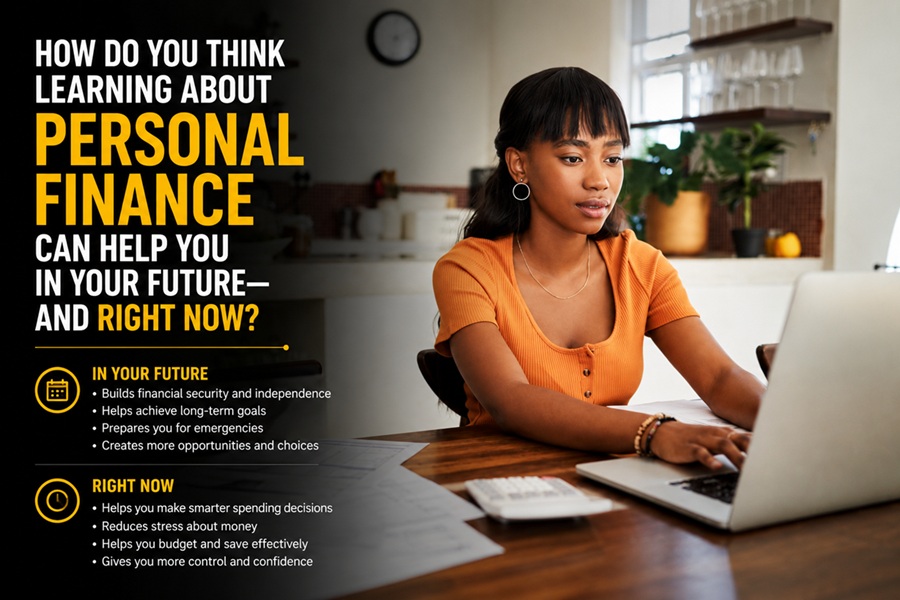
Learning about personal finance helps you right now by giving you control over your daily money decisions, budgeting, spending wisely, avoiding debt, and building savings, so you feel less stressed and more in charge. In the future, it helps you build wealth, prepare for emergencies, buy a home, invest for retirement, and enjoy the freedom that comes from financial security. The habits you build today become the foundation everything else rests on.
What makes personal finance unusual as a subject is that the benefits arrive immediately and compound for decades. Most learning pays off later. This pays off the moment you apply it, in a calmer relationship with money, while also quietly shaping the options available to you twenty years from now.
| Topic | The value of learning personal finance |
| Category | Personal finance and financial literacy |
| Immediate benefits | Budgeting, reduced stress, smarter spending |
| Future benefits | Wealth building, security, freedom of choice |
| Core skills | Budgeting, saving, investing, debt management |
| Key advantage | Small habits compound over time |
| Best time to start | As early as possible, at any age |
How It Helps You Right Now
The immediate payoff is often underestimated. Understanding where your money goes each month changes how you feel about it, replacing vague anxiety with clarity. That shift alone makes a difference to daily life.
Practical benefits show up quickly too. You stop paying unnecessary fees, you catch subscriptions you forgot about, and you start making purchases that reflect what you actually value rather than what the moment tempts you toward.
| Right Now | What It Gives You |
| Budgeting skills | Clarity on where your money goes |
| Spending awareness | Fewer regretted purchases |
| Debt understanding | Avoiding high-interest traps |
| Saving habits | A cushion for unexpected costs |
| Reduced money stress | Calmer, more confident decisions |
Less Stress, More Confidence
Money worry is one of the most common sources of everyday stress, and much of it comes from uncertainty rather than the actual numbers. Not knowing whether you can cover a bill feels far worse than knowing exactly where you stand, even when the situation is tight.
Financial literacy replaces guesswork with knowledge. When you can see your income, expenses, and options clearly, you make decisions from a position of confidence. That psychological benefit arrives long before any meaningful wealth does.
Avoiding Expensive Mistakes Early
Some of the biggest financial setbacks come from decisions made without enough understanding. Signing up for a high-interest card, taking on a loan with poor terms, or missing payments can create problems that take years to unwind.
Learning the basics early acts as a shield. Understanding how interest works, what a credit score does, and how fees accumulate helps you sidestep traps that catch plenty of people who simply were never taught. Avoiding a costly mistake is worth as much as earning extra money.
- Recognising when a deal costs more than it appears
- Understanding contracts before signing them
- Knowing how credit works and protecting your score
- Spotting fees and charges that quietly drain money
How It Helps Your Future
Look further ahead and the benefits multiply. The habits and knowledge you build now determine what becomes possible later, from major purchases to the age at which you can stop working.
| In the Future | What It Enables |
| Emergency fund | Weathering job loss or unexpected costs |
| Investing knowledge | Growing wealth over decades |
| Good credit history | Better rates on homes and loans |
| Retirement planning | Financial independence later in life |
| Debt-free living | More income available for your goals |
The Power of Starting Early
Time is the most valuable asset in personal finance, and it is the one thing you cannot buy back. Money invested early has decades to grow, and habits formed early become automatic rather than effortful.
Someone who starts saving modestly in their twenties often ends up ahead of someone who saves much more aggressively starting in their forties. This is not because they earned more. It is because their money had longer to work. Understanding this alone can change the trajectory of a financial life.
Freedom and Choice
Perhaps the greatest long-term benefit is not wealth itself but the options it creates. Financial security means you can leave a job that makes you miserable, take a risk on a business idea, support family in a crisis, or simply say no to things you do not want to do.
Money handled well buys flexibility. It turns life decisions into genuine choices rather than obligations dictated by your bank balance. That freedom is what most people are really after when they talk about wanting to be good with money.
Understanding Debt Before It Understands You
Debt is where financial knowledge pays off most dramatically. Used carefully, borrowing helps people buy homes, study, or start businesses. Used carelessly, it quietly consumes income for years through interest that buys you nothing at all.
Learning how interest compounds, how minimum payments work, and how quickly small balances grow changes how you treat credit. Someone who understands that a credit card balance carried month after month costs far more than the original purchase behaves very differently from someone who does not.
Preparing for the Unexpected
Life delivers surprises regardless of how carefully you plan. A car breaks down, a job disappears, a medical bill arrives. What separates a manageable setback from a financial crisis is usually whether you had a cushion in place beforehand.
An emergency fund is the practical expression of this preparation. Even a modest amount set aside can stop a bad month from turning into debt that takes years to clear. Personal finance teaches you to build that buffer before you need it, which is the only time you can.
Making Bigger Decisions With Confidence
The major financial moments in life, buying a home, choosing a career path, deciding whether to take a loan, are far less intimidating when you understand the underlying mechanics. You can evaluate options rather than trusting whoever sounds most persuasive.
This matters because the biggest decisions carry the biggest consequences. A poorly understood mortgage or an unnecessary loan can affect your finances for decades. Knowledge turns these moments from sources of anxiety into choices you can make deliberately.
| Big Decision | What Knowledge Gives You |
| Buying a home | Understanding true affordability and terms |
| Taking a loan | Judging whether the cost is worth it |
| Choosing insurance | Knowing what protection you actually need |
| Starting to invest | Confidence to begin rather than delay |
Skills Worth Learning First
Personal finance can feel overwhelming, but a handful of core skills deliver most of the benefit. Starting with these gives you a solid foundation to build on later.
- Building and sticking to a simple budget
- Understanding how interest and debt actually work
- Creating an emergency fund before anything else
- Learning the basics of saving and investing
- Reading and understanding financial documents
- Setting clear, realistic financial goals
It Is Not About Being Wealthy
A common misconception is that personal finance only matters for people with significant money. The opposite is closer to the truth. When resources are limited, every decision carries more weight, which makes financial knowledge more valuable, not less.
Learning these skills is not about becoming rich. It is about making the most of whatever you have, protecting yourself from setbacks, and steadily building toward the life you want. Those benefits apply at every income level, and often matter most to those with the least room for error.
Turning Knowledge Into Action
Understanding personal finance only helps when it changes what you do. The gap between knowing and doing is where most people get stuck, so translating learning into small, concrete steps matters more than absorbing endless information.
Start with one habit rather than overhauling everything at once. Track your spending for a month, open a savings account, or set up an automatic transfer. Each small action reinforces the next, and momentum builds naturally from there.
Sharing What You Learn
One overlooked benefit is the ability to help people around you. Financial knowledge tends to travel through families and friendships, and someone who understands the basics often becomes the person others turn to when facing a decision they find confusing.
Explaining a concept to someone else also deepens your own grasp of it. Talking through a budget with a friend, or helping a family member compare two loan offers, reinforces the habits you are building yourself while genuinely improving someone else’s situation.
Frequently Asked Questions
How does personal finance help me right now?
It gives you control over daily money decisions through budgeting, smarter spending, and saving, which reduces stress and helps you avoid costly debt.
How does it help my future?
It builds the foundation for wealth, emergency security, home ownership, retirement, and the freedom to make life choices without money dictating them.
When should I start learning about personal finance?
As early as possible, since time amplifies the benefit of good habits. That said, it is genuinely never too late to start improving your financial situation.
Do I need to earn a lot for this to matter?
No. Financial knowledge matters most when money is limited, because it helps you make the most of what you have and avoid expensive mistakes.
What should I learn first?
Start with budgeting, understanding debt and interest, and building a small emergency fund. Those three cover the majority of everyday financial situations.