
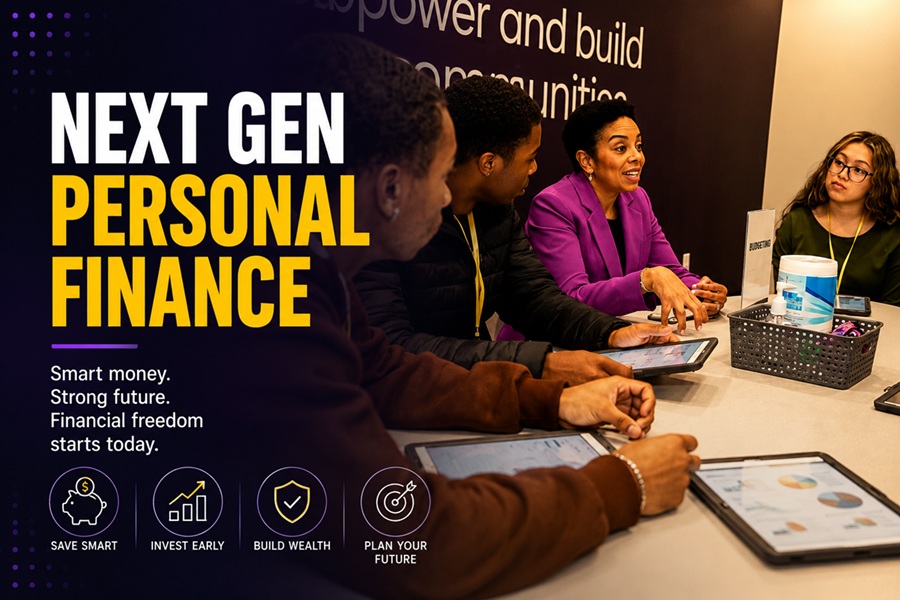
Next Gen Personal Finance, commonly known as NGPF, is a nonprofit organisation that provides completely free personal finance curriculum and teacher training to schools across the United States. Founded in 2014, it has grown into the leading provider of financial education resources for teachers of grades 6 through 12, offering ready-to-use lessons, activities, games, and professional development at no cost to educators or schools.
The core idea behind NGPF is simple but ambitious: every young person should learn essential money skills before leaving high school. Rather than selling its materials, the organisation gives everything away for free, funded by an endowment, so that cost is never a barrier to teaching financial literacy. That free-for-all model is what sets it apart from most educational resource providers.
| Organisation | Next Gen Personal Finance (NGPF) |
| Type | Nonprofit organisation |
| Founded | 2014 |
| Co-founders | Tim Ranzetta and Jessica Endlich |
| Origin | East Palo Alto, California |
| Focus | Free personal finance curriculum and teacher training |
| Audience | Teachers and students, grades 6 to 12 |
| Cost | Completely free |
| Signature goal | Mission 2030, universal high school finance education |
| Website niche | Financial literacy education |
How NGPF Started
The organisation traces back to a volunteer teaching experience. In the early 2010s, Tim Ranzetta volunteered to teach a personal finance course at Eastside College Prep in East Palo Alto, California, and struggled to find good ready-made materials. He ended up building his own lessons from scratch.
What he saw in that classroom convinced him something bigger was needed. The students engaged deeply with the material, and their parents began reaching out with money questions of their own. In 2014, Ranzetta teamed up with Jessica Endlich, then a high school principal in New York City, and together they founded NGPF as a nonprofit to give teachers everywhere the resources he had once lacked.
What NGPF Actually Offers
NGPF is far more than a single textbook. It provides a full ecosystem of teaching resources designed to fit different course lengths and teaching styles. Everything is built with educators in mind and kept up to date as the financial world changes.
| Resource | What It Provides |
| Full courses | Nine-week, semester, and full-year options |
| Individual lessons | Standalone lessons on specific topics |
| Activities and projects | Hands-on tasks and case studies |
| Arcade games | Money-themed games like Payback and STAX |
| Question of the Day | Daily prompts to spark discussion |
| Professional development | Training and certification for teachers |
The Curriculum Topics
The curriculum covers the practical money skills young people need for adult life. Rather than abstract theory, it focuses on real situations students will face, from opening a bank account to filing taxes. The topics build a well-rounded foundation.
- Banking, checking accounts, and online money management
- Saving and the value of building a cushion
- Types of credit, including loans, credit cards, and student debt
- Budgeting and managing everyday spending
- Investing and the basics of growing money
- Taxes, insurance, and protecting your assets
Free Professional Development for Teachers
One of NGPF’s most valued offerings is its support for teachers themselves. Many educators feel underprepared to teach personal finance, especially if they lack a finance background. NGPF addresses this directly through free training designed to build both knowledge and confidence.
Through its academy, teachers can take certification courses, join live virtual workshops, and work through on-demand modules, all at no cost. This focus on equipping educators, not just handing them materials, is a big part of why the organisation has spread so widely across schools.
Mission 2030
NGPF’s guiding ambition is captured in what it calls Mission 2030. The goal is that by the year 2030, every high school student in the United States will take a standalone personal finance course before graduating, giving them the money skills to thrive as adults.
To advance this, the organisation supports advocacy work encouraging states to require a dedicated personal finance course. Over recent years, the number of states mandating such a course has risen substantially, reflecting growing momentum behind the idea that financial education belongs in every school.
Why NGPF Has Grown So Popular
Several factors explain the organisation’s rapid rise among educators. The most obvious is cost, since everything is genuinely free, but the quality and practicality of the materials matter just as much. Teachers return because the resources actually work in real classrooms.
| Reason | Why It Matters |
| Completely free | No cost barrier for schools or teachers |
| Ready to teach | Lessons need little preparation |
| Regularly updated | Content stays current with the real world |
| Engaging format | Games and activities hold student attention |
| Teacher support | Training builds educator confidence |
The Arcade and Interactive Learning
One reason NGPF resonates with students is its use of games to teach money concepts. Its arcade features award-winning titles that turn abstract ideas into playable experiences. Learning to manage a budget or spot a scam becomes far more memorable when it happens through a game.
These interactive tools tap into how young people naturally engage with technology. Instead of passively reading about compound interest or debt, students make decisions and see the consequences play out. This hands-on approach helps concepts stick in a way that lectures rarely achieve.
How It Compares to Other Resources
Plenty of organisations offer financial education materials, but few match NGPF’s combination of scale, quality, and price. Many alternatives charge for their content or offer narrower resources, while NGPF provides a comprehensive, free package covering entire courses.
The organisation also stands out for keeping its content current. Financial topics like digital banking, gig work, and cryptocurrency evolve quickly, and NGPF updates its lessons to reflect the real world students are entering. That commitment to staying relevant is harder to find among static, one-time resources.
| NGPF Strength | Common Alternative Limitation |
| Fully free curriculum | Often paid or subscription-based |
| Complete courses | Sometimes only scattered lessons |
| Regular updates | Content can become outdated |
| Built-in teacher training | Little or no educator support |
The Broader Impact
Beyond individual classrooms, NGPF has helped shift the national conversation around financial education. By making quality curriculum freely available, it has removed one of the biggest obstacles schools cited for not teaching the subject: a lack of good, ready-to-use materials.
Its advocacy work has run alongside this, supporting the growing movement to require personal finance in high schools. Together, the free resources and the policy push reinforce each other, helping more students gain access to money education than ever before.
Who NGPF Is For
The primary audience is teachers and students in middle and high school, but the resources reach further than that. Homeschooling families, after-school programmes, and even curious individuals can access the freely available materials to learn or teach money skills.
Because the content is organised by course length and topic, it flexes to fit many situations. A teacher can adopt a full year-long course, drop a single lesson into an existing class, or use the math-focused activities to weave finance into a maths lesson. That flexibility widens its appeal.
How the Free Model Works
A natural question is how an organisation can give away high-quality curriculum indefinitely. The answer lies in its funding structure. An endowment established by the co-founder underwrites the work, allowing NGPF to provide its curriculum and professional development without charging schools.
This model removes the commercial pressures that shape many educational products. Because NGPF is not trying to sell subscriptions, it can focus entirely on quality and reach, which aligns neatly with its mission of getting financial education into as many classrooms as possible.
A Note for Teachers Using the Resources
While the materials are high quality, teachers do well to review them before class, as some lessons link to third-party websites that vary in quality or may carry ads. A quick check ensures everything fits the classroom and the age group.
This is standard practice with any curated resource and does not detract from the overall value. The core NGPF lessons and activities are designed by educators, and the guidance to preview external links simply reflects careful teaching rather than a flaw in the programme.
Frequently Asked Questions
Is Next Gen Personal Finance free?
Yes. NGPF provides all of its curriculum, activities, and teacher professional development completely free, funded by an endowment rather than charging schools or teachers.
Who founded NGPF?
It was co-founded in 2014 by Tim Ranzetta and Jessica Endlich, growing out of Ranzetta’s experience volunteering to teach a personal finance course in California.
Who is NGPF for?
Mainly teachers and students in grades 6 to 12, though homeschoolers and individuals can also use the freely available resources to learn or teach personal finance.
What is Mission 2030?
It is NGPF’s goal that by 2030, every US high school student will take a standalone personal finance course before graduating, supported by advocacy to encourage state requirements.
What topics does NGPF cover?
The curriculum spans banking, saving, credit, budgeting, investing, taxes, insurance, and being a savvy consumer, focusing on practical skills for real financial life.